
The Kedarnath Yatra is not just a pilgrimage—it is a profound spiritual calling that draws devotees to one of the most powerful and revered shrines of Lord Shiva. Nestled high in the Garhwal Himalayas of Uttarakhand, the Kedarnath Temple stands at an altitude of over 3,500 meters, surrounded by snow-clad peaks, ancient glaciers, and a silence that feels divine. For centuries, saints, sages, and devotees have undertaken the Kedarnath Yatra seeking blessings, forgiveness, inner peace, and liberation.
Every step of the Kedarnath Yatra feels sacred. From chanting “Har Har Mahadev” on the mountain trails to witnessing the first glimpse of the stone temple against the dramatic Himalayan backdrop, the journey touches the soul deeply. It is a yatra that tests physical strength but rewards spiritual devotion beyond measure.

✨ Spiritual Significance of the Kedarnath Yatra
The Kedarnath Yatra holds immense importance in Hindu belief. Kedarnath is one of the 12 Jyotirlingas of Lord Shiva and also a vital part of the Chardham Yatra. According to legend, after the Mahabharata war, the Pandavas sought Lord Shiva’s forgiveness for their sins. Shiva avoided them and took the form of a bull, eventually disappearing into the ground at Kedarnath, where His hump appeared. This sacred manifestation made Kedarnath one of the most powerful Shiva temples in India.
Devotees believe that completing the Kedarnath Yatra washes away past sins, removes karmic burdens, and brings the seeker closer to moksha. The intense spiritual vibrations around the temple, amplified by the raw energy of the Himalayas, make the Kedarnath Yatra a life-transforming experience.
📍 Location & Setting of Kedarnath
The Kedarnath Temple is located in Rudraprayag district, Uttarakhand, near the head of the Mandakini River. Towering Himalayan peaks like Kedarnath Dome, Bharatekuntha, and Chaukhamba form a majestic natural wall around the shrine. The landscape is dramatic, untouched, and deeply spiritual.
What makes the Kedarnath Yatra extraordinary is this setting—where nature itself feels like a guardian of the temple. The sound of temple bells echoes across valleys, clouds drift silently around the shrine, and snow peaks stand as eternal witnesses to devotion.
🛣 How to Reach Kedarnath Yatra
The Kedarnath Yatra begins from Gaurikund, which is accessible by road from major towns like Haridwar, Rishikesh, and Dehradun.
- By Road: Reach Gaurikund via Rishikesh → Devprayag → Rudraprayag → Sonprayag → Gaurikund
- By Trek: From Gaurikund, a 16 km trek leads to Kedarnath Temple
- By Helicopter: Helicopter services operate from Phata, Guptkashi, and Sersi for those unable to trek
Whether by foot or helicopter, every route of the Kedarnath Yatra carries devotion, anticipation, and awe.
🥾 The Kedarnath Trek Experience
The trek is the heart of the Kedarnath Yatra. Walking through mountain paths, crossing rivers, witnessing waterfalls, and chanting Shiva’s name creates a powerful spiritual rhythm. The trek can be challenging, especially due to altitude and weather, but it is well-supported with rest points, food stalls, medical aid, and pony services.
Many devotees say that the physical effort of the Kedarnath Yatra strengthens faith and humility. Reaching the temple after the trek feels like a personal victory blessed by Mahadev himself.
🕯 Darshan & Rituals at Kedarnath Temple
Darshan during the Kedarnath Yatra is deeply emotional. The ancient stone Jyotirlinga inside the sanctum radiates immense power. Daily rituals include:
- Morning Abhishek
- Afternoon Bhog
- Evening Aarti
- Shayan Aarti
The early morning hours are especially powerful, when the temple opens amidst chanting, lamps, and the cold Himalayan air. Many pilgrims describe this moment as the highlight of their Kedarnath Yatra.
🌦 Best Time for Kedarnath Yatra
The Kedarnath Yatra usually opens in late April or early May and closes around October/November due to snowfall.
- May–June: Pleasant weather, peak yatra season
- July–August: Lush scenery but monsoon caution required
- September–October: Clear skies, fewer crowds, peaceful darshan
Choosing the right time makes the Kedarnath Yatra safer and more fulfilling.
🚁 Helicopter Kedarnath Yatra Package – A Divine Shortcut to Mahadev
For devotees who are unable to undertake the long and physically demanding trek, the Helicopter Kedarnath Yatra Package offers a blessed alternative that combines comfort, safety, and devotion. Helicopter services operate from Phata, Sersi, and Guptkashi, flying pilgrims directly close to Kedarnath Temple in a short time. What normally takes an entire day of trekking can be completed in minutes through the air, offering breathtaking aerial views of the Mandakini valley, glaciers, rivers, and snow-clad Himalayan peaks.
The Helicopter Kedarnath Yatra Package is especially popular among senior citizens, families, working professionals, and pilgrims with time constraints. These packages are usually well-organized and include priority darshan assistance, ground handling support, and waiting lounge facilities at helipads. Despite the modern convenience, the spiritual intensity of the Kedarnath Yatra remains untouched—many devotees say that seeing the temple from the sky feels like Mahadev himself is guiding their journey. Weather conditions play a crucial role, so flexibility and patience are essential parts of the helicopter yatra experience.

💰 Budget vs Luxury Kedarnath Yatra – Choosing the Right Experience
The Kedarnath Yatra can be planned in both budget-friendly and luxury-supported formats, depending on a pilgrim’s comfort needs and travel style. Budget Kedarnath Yatra options focus on simplicity and devotion—shared transport, basic guesthouses or dharamshalas, standard meals, and walking or pony-based trekking. These journeys are ideal for spiritually inclined travelers who value humility, endurance, and traditional pilgrimage experiences.
On the other hand, luxury Kedarnath Yatra packages are designed for those seeking comfort without compromising devotion. These include premium hotels in base towns like Guptkashi, helicopter transfers, private vehicles, curated meals, guided assistance, and VIP darshan coordination. Luxury packages reduce physical strain, waiting time, and logistical stress—allowing pilgrims to focus entirely on prayer and spiritual connection. Both budget and luxury Kedarnath Yatra options ultimately lead to the same divine destination; the difference lies only in the path chosen, not the blessing received.
🏔 Nearby Places to Visit During Kedarnath Yatra
While undertaking the Kedarnath Yatra, pilgrims often explore nearby sacred and scenic locations:
Bhairavnath Temple
Located near Kedarnath, this temple is dedicated to Bhairav Baba, the protector of Kedarnath. A visit here is considered essential to complete the Kedarnath Yatra.
Bhairavnath Temple stands as the divine protector of Kedarnath, perched on a hill overlooking the sacred shrine. Devotees believe that Lord Bhairav, the fierce manifestation of Shiva, guards Kedarnath during the harsh winter months when the main temple remains closed under heavy snow. A short but steep walk from Kedarnath leads to Bhairavnath Temple, rewarding pilgrims with panoramic views of the valley, snow peaks, and the Mandakini river far below. The spiritual atmosphere here is intense and powerful, often filled with strong winds and deep silence that amplify devotion. Visiting Bhairavnath Temple is considered an essential part of the Kedarnath Yatra, as many believe no pilgrimage to Kedarnath is complete without seeking the blessings of its divine guardian.

Vasuki Tal
A high-altitude glacial lake near Kedarnath, ideal for trekkers and nature lovers seeking solitude and spiritual calm.
Vasuki Tal is a mesmerizing high-altitude glacial lake located near Kedarnath, surrounded by towering Himalayan peaks and untouched alpine landscapes. Named after Vasuki, the serpent king associated with Lord Shiva, this sacred lake is believed to be a meditation site of ancient sages. Reaching Vasuki Tal requires a challenging trek, making it ideal for spiritually inclined trekkers and adventure seekers who seek solitude and deep connection with nature. The crystal-clear waters reflect snow-covered mountains, creating a surreal and almost otherworldly experience. Vasuki Tal is not just a trekking destination—it is a place of silence, reflection, and raw Himalayan energy, making it one of the most spiritually and visually powerful spots near Kedarnath.

Triyuginarayan Temple
Believed to be the wedding site of Lord Shiva and Goddess Parvati, this temple adds mythological depth to the Kedarnath Yatra.
Triyuginarayan Temple holds immense mythological importance and is believed to be the sacred wedding site of Lord Shiva and Goddess Parvati. Located near Kedarnath, this ancient Vishnu temple is centered around an eternal flame that has been burning since the divine marriage took place. According to legends, Lord Vishnu himself played the role of Parvati’s brother, making this site deeply revered in Hindu tradition. The temple is surrounded by peaceful villages, lush greenery, and mountain views, offering a calm contrast to the rugged terrain of Kedarnath. Many couples visit Triyuginarayan Temple to seek blessings for a harmonious married life, making it a spiritually rich and emotionally significant stop during the Kedarnath Yatra.
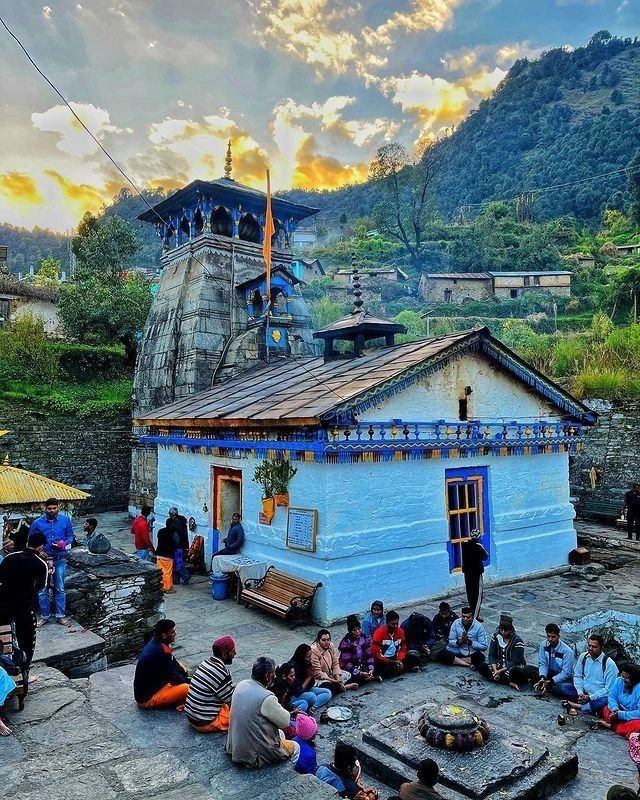
Guptkashi
A sacred town with ancient Shiva temples, often used as a base for the Kedarnath Yatra.
Guptkashi is a sacred town located on the Kedarnath Yatra route and serves as a major base for pilgrims traveling to Kedarnath. The town is known for its ancient Vishwanath and Ardhanarishwar temples, which carry strong spiritual vibrations. According to legend, Lord Shiva hid here briefly to avoid the Pandavas, giving the town its name—“Gupt” meaning hidden. Guptkashi offers stunning views of snow-covered peaks, peaceful river valleys, and serene temple surroundings, making it a perfect place for rest and reflection before continuing the yatra. With better accommodation options, helipad services, and essential facilities, Guptkashi seamlessly blends devotion, comfort, and Himalayan beauty, making it an indispensable stop in the Kedarnath pilgrimage journey.
❤️ Why the Kedarnath Yatra Touches the Heart
The Kedarnath Yatra is not about comfort or luxury—it is about surrender. The cold wind, thin air, long walks, and towering mountains strip away ego and distractions. What remains is faith, devotion, and an unspoken connection with the divine.
Pilgrims often say that Kedarnath calls you when you are ready. Once you answer that call, the experience stays with you forever—in your prayers, your strength, and your silence.
The Kedarnath Yatra teaches humility in a way few journeys can. As you walk through the vast Himalayan silence, surrounded by peaks that have stood unchanged for centuries, you begin to realize how small yet deeply connected you are to the universe. Every breath feels intentional, every step becomes a prayer, and every moment of fatigue transforms into quiet gratitude. In Kedarnath, there is no rush—only presence.
The mountains don’t impress; they awaken. And when you finally stand before the ancient stone temple, with bells echoing softly in the cold air, something within you settles. You may arrive seeking blessings, but you leave with something far greater—a calm strength, a deeper faith, and a sense that Mahadev walks with you long after the journey ends.
🔗 Explore Our Packages
- Budget Auli Tour From Delhi
- Chakrata Tour Package From Delhi
- Harshil Uttarkashi Tour Package
- Kanatal Budget Package From Dehradun
- Khirsu Tour Package From Dehradun
- Mussoorie Tour Package From Dehradun
- Delhi to Nainital Tour Package
- Rishikesh Tour Package
- Himachal Pradesh Tour Package
- Nepal Tour Package From Delhi
- Char Dham Yatra Package Tour
- Do Dham Yatra Package
- Kailash Mansarovar Yatra 2026
- Kedarnath Temple Tour Package
- Vrindavan Group Tour From Dehradun
- Chopta Tungnath Trek Package
- Dayara Bugyal Trek Package
- Gomukh Tapovan Trek Package (Dehradun)
- Har Ki Dun Trek – Himalayan Adventure
- Kedarkantha Trek From Dehradun
- Khait Parvat Trek Package
- Kuari Pass Trek – Uttarakhand
- Nag Tibba Trek From Dehradun
- Ranthan Kharak Trek
- Valley of Flowers Uttarakhand Trek
🔗 EXTERNAL LINKS (JustDial, Facebook, Instagram ONLY) - ✅ JustDial (Exploring Wings)
- ✅ Facebook (Exploring Wings)
- ✅ Instagram (Exploring Wings)
🌸 Conclusion – Kedarnath Yatra, A Journey Beyond the Physical
The Kedarnath Yatra is one of the most powerful spiritual journeys in India. It combines devotion, endurance, nature, and divine grace in a way few places can. Standing before Lord Shiva in Kedarnath, with snow peaks around and prayers in the air, feels like standing at the edge of the material world and the doorway to the eternal.
Whether you come seeking forgiveness, blessings, strength, or peace, the Kedarnath Yatra gives you something deeper—faith renewed and the quiet assurance that Mahadev is always with you.
What makes the Kedarnath Yatra truly extraordinary is the way it transforms the inner world of every pilgrim. In the presence of Lord Shiva, amidst towering snow-clad peaks and the vast Himalayan silence, worldly worries begin to fade without effort. The journey humbles the strongest minds and comforts the most burdened hearts. Many devotees describe an unexplainable sense of protection and reassurance while standing in Kedarnath—as if Mahadev himself acknowledges their devotion. Long after the yatra ends, the memory of that sacred space continues to guide one’s thoughts, prayers, and choices, reminding them that faith is not just something we seek—it is something that quietly walks beside us through every phase of life.
❓ FAQs – Kedarnath Yatra
1. What is the Kedarnath Yatra?
The Kedarnath Yatra is a sacred pilgrimage to the Kedarnath Temple in Uttarakhand, one of the 12 Jyotirlingas of Lord Shiva and part of the Char Dham.
2. Where is Kedarnath Temple located?
Kedarnath Temple is located in Rudraprayag district, Uttarakhand, at an altitude of around 3,580 meters in the Garhwal Himalayas.
3. Why is Kedarnath Yatra so important?
The Kedarnath Yatra is believed to cleanse sins, remove karmic burdens, and bring devotees closer to moksha through Lord Shiva’s blessings.
4. What is the best time for Kedarnath Yatra?
The best time for Kedarnath Yatra is from May to June and September to October when weather conditions are relatively stable.
5. How long is the Kedarnath trek?
The trek from Gaurikund to Kedarnath is approximately 16 km and usually takes 6–8 hours depending on fitness and weather.
6. Can senior citizens do the Kedarnath Yatra?
Yes, senior citizens can undertake the Kedarnath Yatra with proper medical fitness, pony services, palkis, or helicopter options.
7. Is helicopter service available for Kedarnath Yatra?
Yes, helicopter services operate from Phata, Sersi, and Guptkashi for the Kedarnath Yatra, subject to weather conditions.
8. What documents are required for Kedarnath Yatra?
Valid ID proof and mandatory yatra registration are required. Medical fitness is strongly recommended.
9. Is Kedarnath Yatra safe?
Yes, the Kedarnath Yatra is safe when undertaken during the official season with weather advisories followed carefully.
10. What should I pack for Kedarnath Yatra?
Warm clothing, rain protection, trekking shoes, medicines, ID proof, torch, power bank, and dry food essentials.
11. How cold does it get in Kedarnath?
Temperatures can drop below zero at night, even in summer. Winter temperatures are extremely harsh with heavy snowfall.
12. Are accommodations available near Kedarnath?
Yes, basic guesthouses, dharamshalas, GMVN lodges, and tents are available near Kedarnath and Gaurikund.
13. What is the significance of Bhairavnath Temple?
Bhairavnath Temple is believed to protect Kedarnath during winter when the main temple is closed.
14. Can children do the Kedarnath Yatra?
Children can do the Kedarnath Yatra if they are physically fit and acclimatized properly.
15. Is mobile network available during Kedarnath Yatra?
Network connectivity is limited and mostly available near base locations like Guptkashi and Gaurikund.
16. When does Kedarnath Temple open and close?
Kedarnath Temple usually opens in late April or early May and closes around October or November.
17. Is food available during the Kedarnath trek?
Yes, small food stalls and tea shops are available along the trek route.
18. What makes Kedarnath spiritually powerful?
Its Jyotirlinga status, Pandava legend, Himalayan setting, and intense silence create powerful spiritual energy.
19. Can Kedarnath Yatra be done in one day?
The trek itself can be done in a day, but most pilgrims plan at least 2–3 days including travel and rest.
20. Why do devotees revisit Kedarnath?
Many believe Kedarnath calls you again—devotees return for peace, gratitude, and deeper spiritual connection.